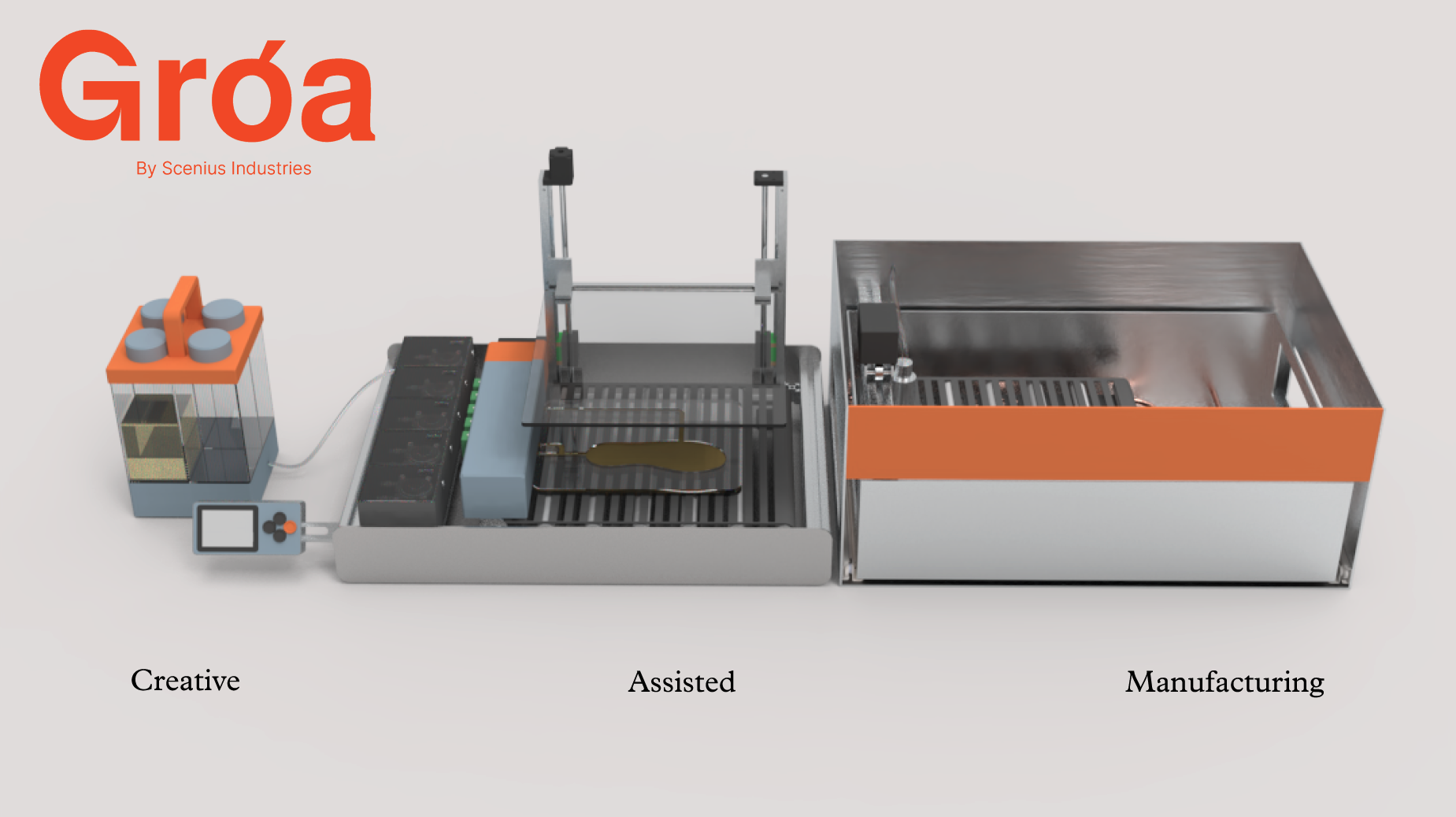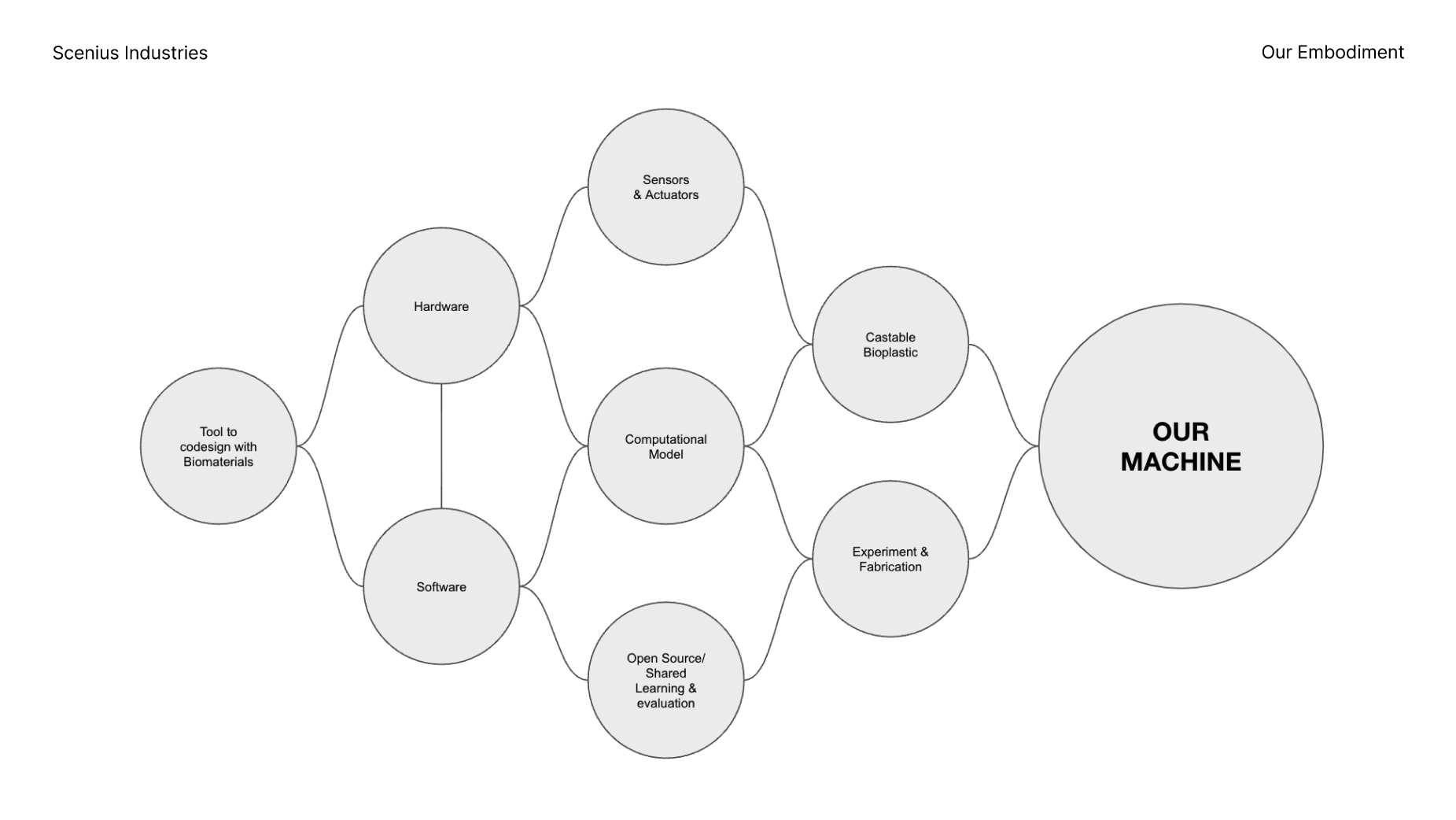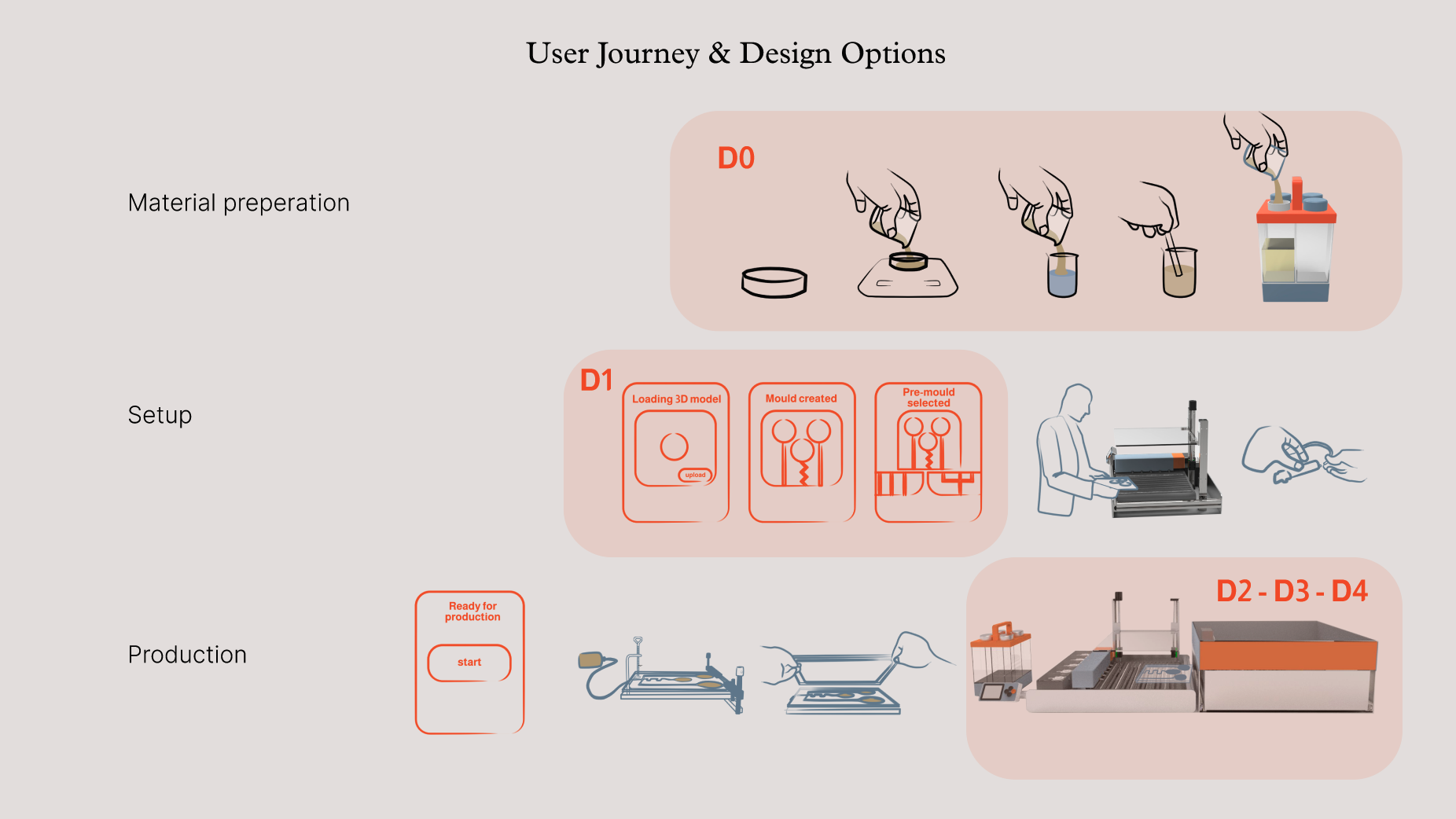
Scenius Industries is a project to imagine and explore what could be possible for democratise the bioplastic manufacturing. There is a big challenge in the current industry that bioplastic is hard to scale, mostly because the manufacturing facilities are optimised for plastic.
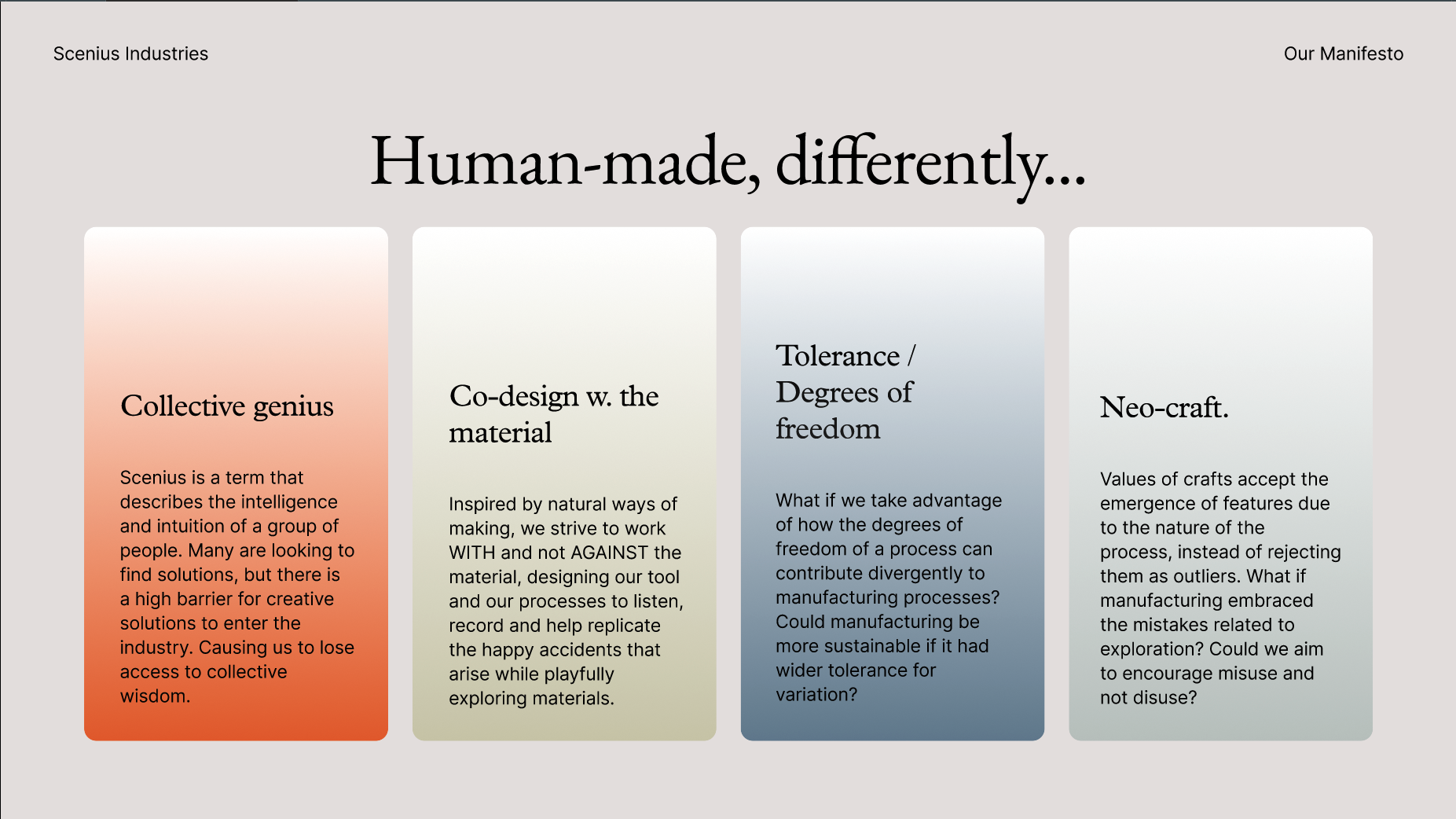
We start by imagining what could be a future of manufacturing where more distributed, and creatively lead by the science
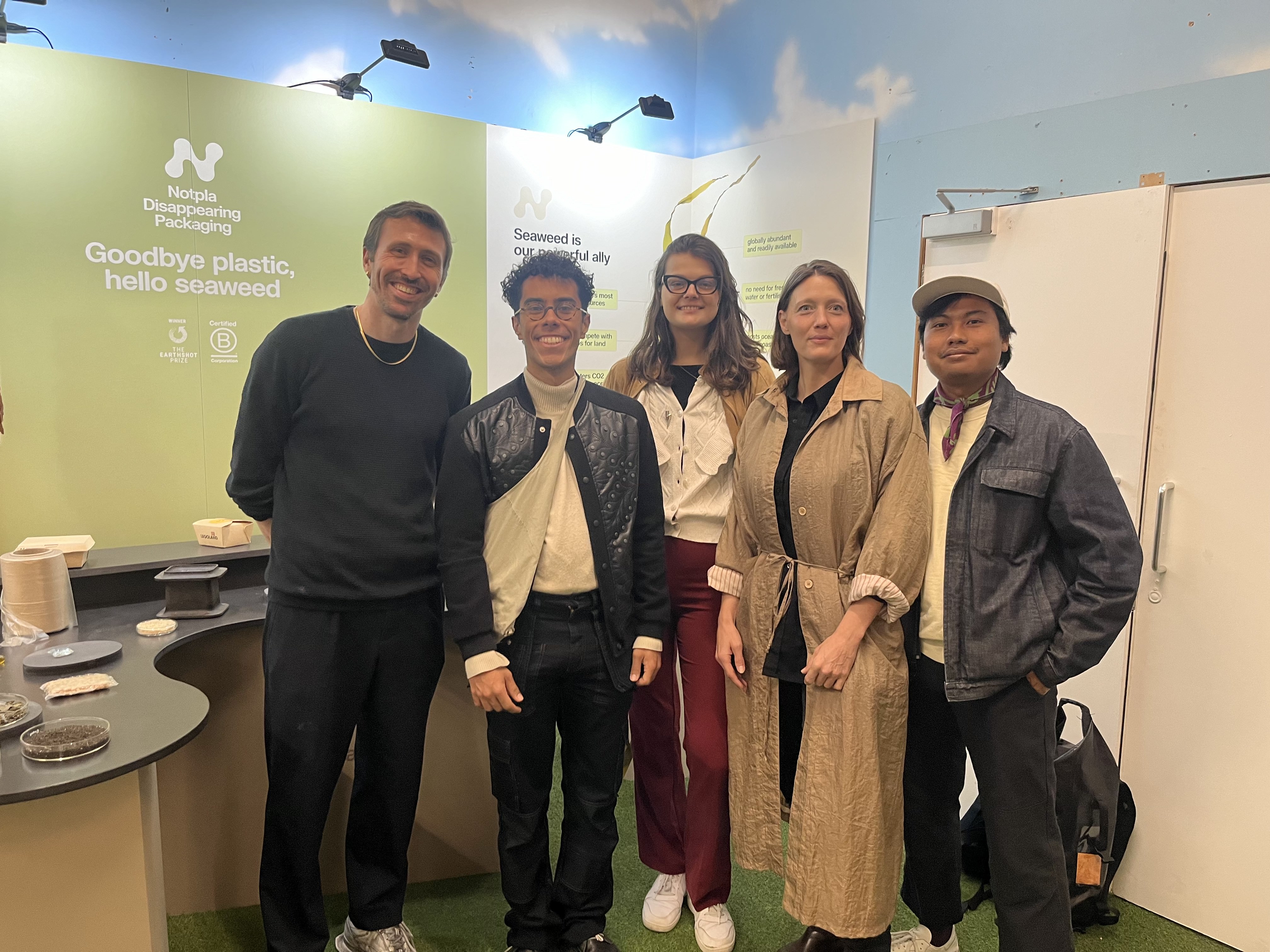
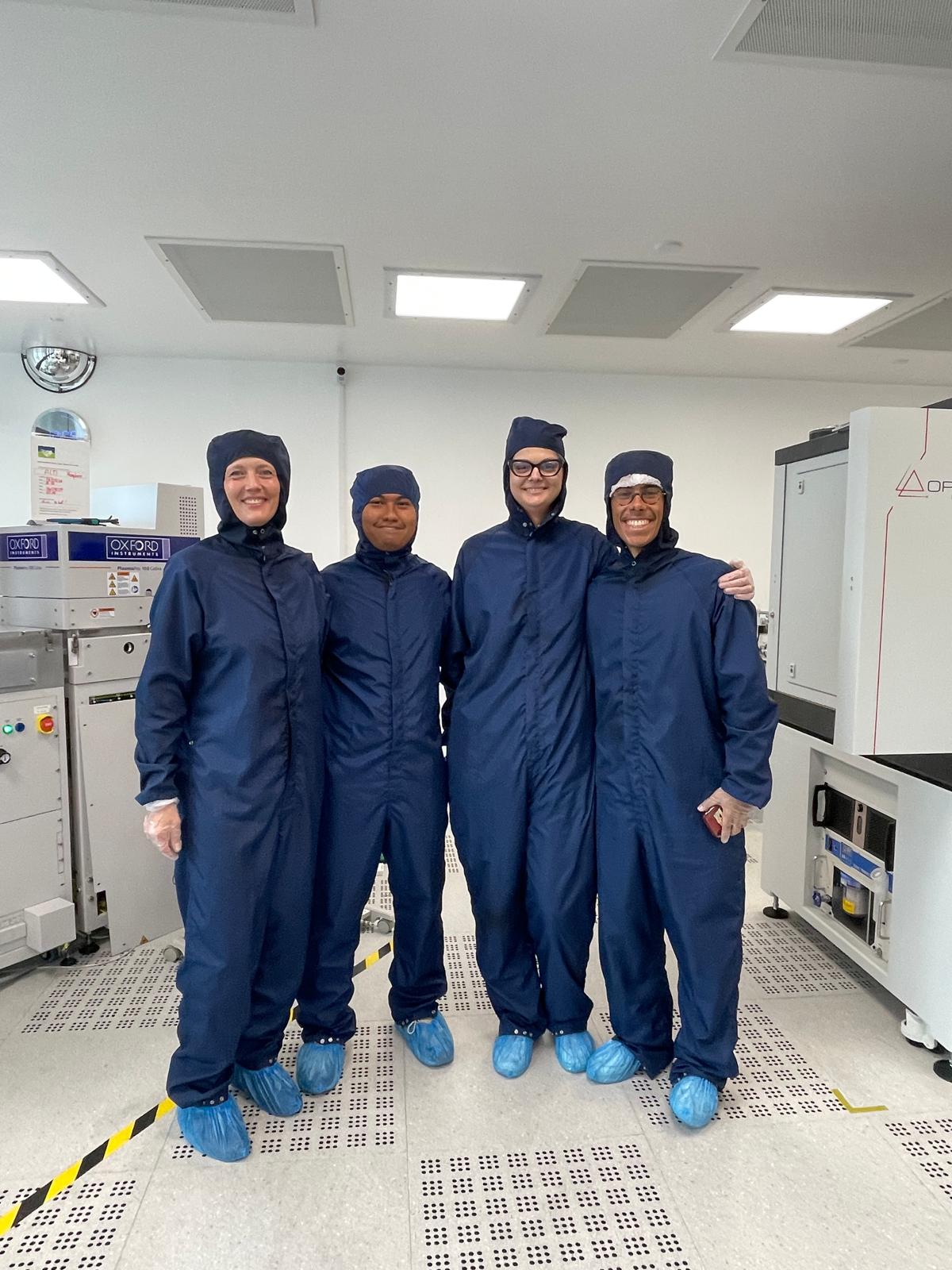
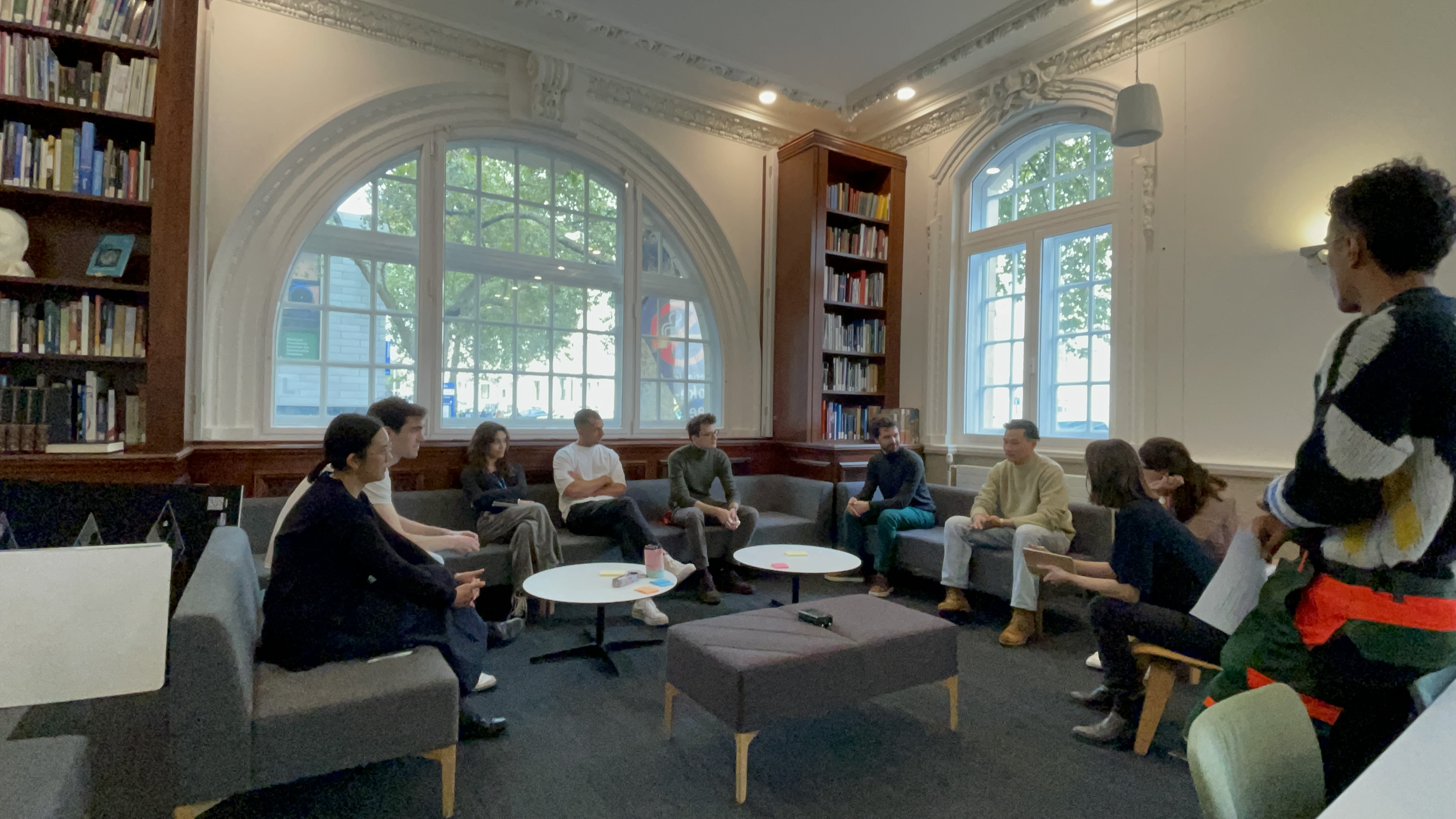
Based on our research, through visits, interviews, and focus group discussions with various biomaterial innovators, we sought to understand their current processes and challenges in developing biomaterial designs. We found that they typically begin by experimenting in the kitchen, then scale up production by repurposing food production machinery. One example is Notpla, a successful biomaterial startup that managed to scale up by adapting sausage-making machinery for their production process.
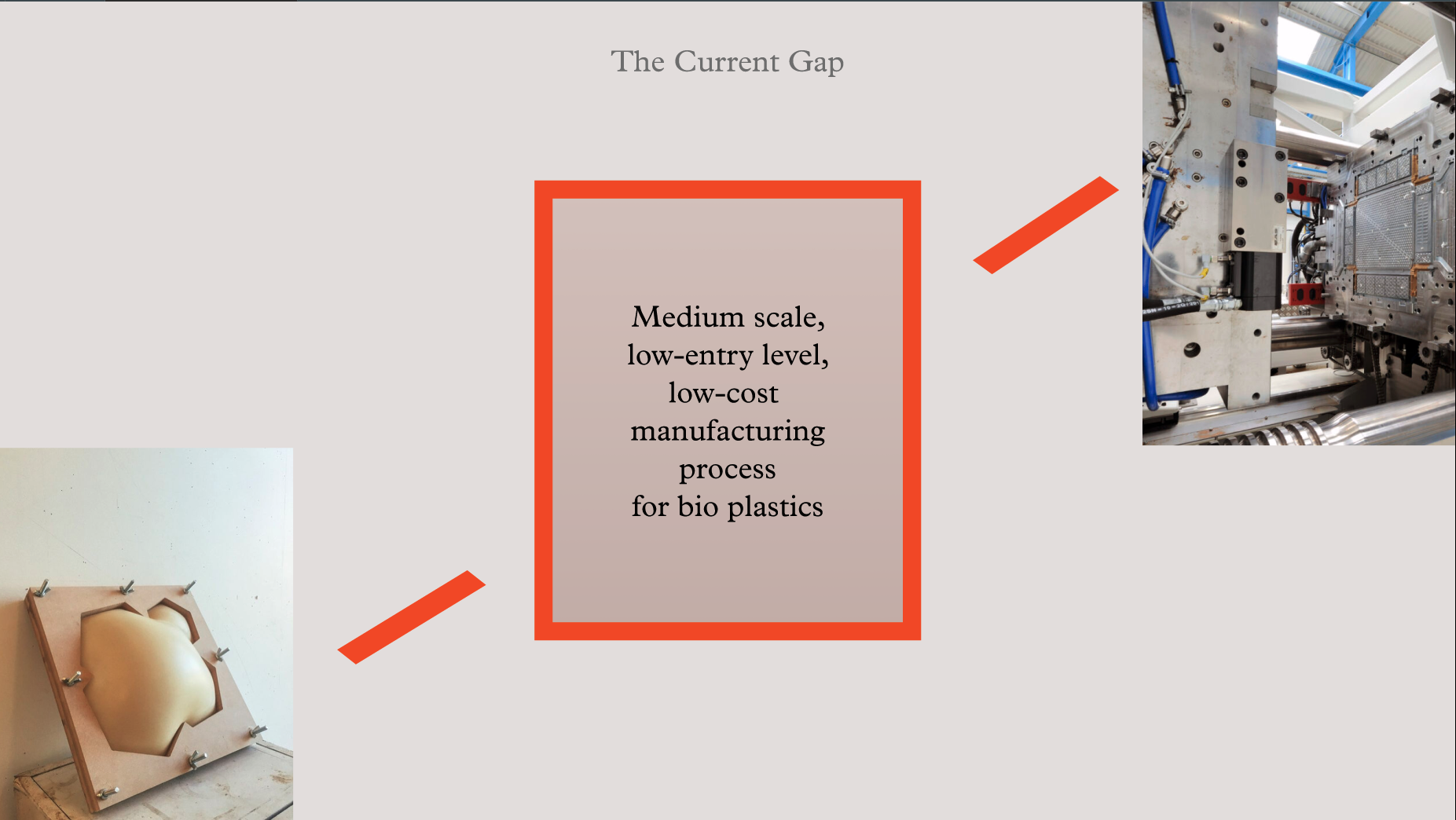
While successful companies able to access bigger and more advances machines for productions, smaller, or emerging designer who are getting started to biomaterials product face some difficulties. Ended up their project as kitchen exploration rather becomes multi-millionaires ideas that solve the plastic problem
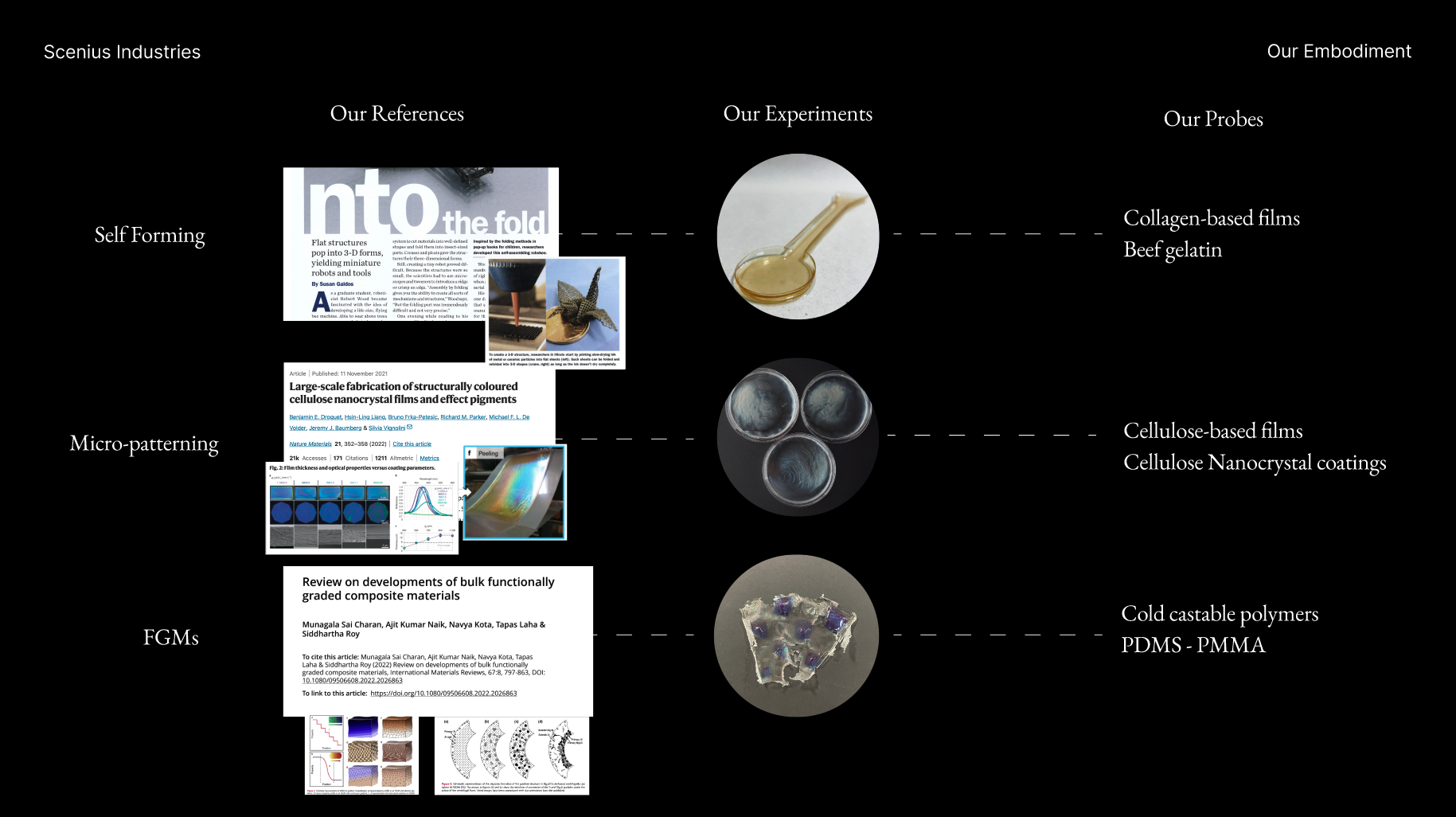
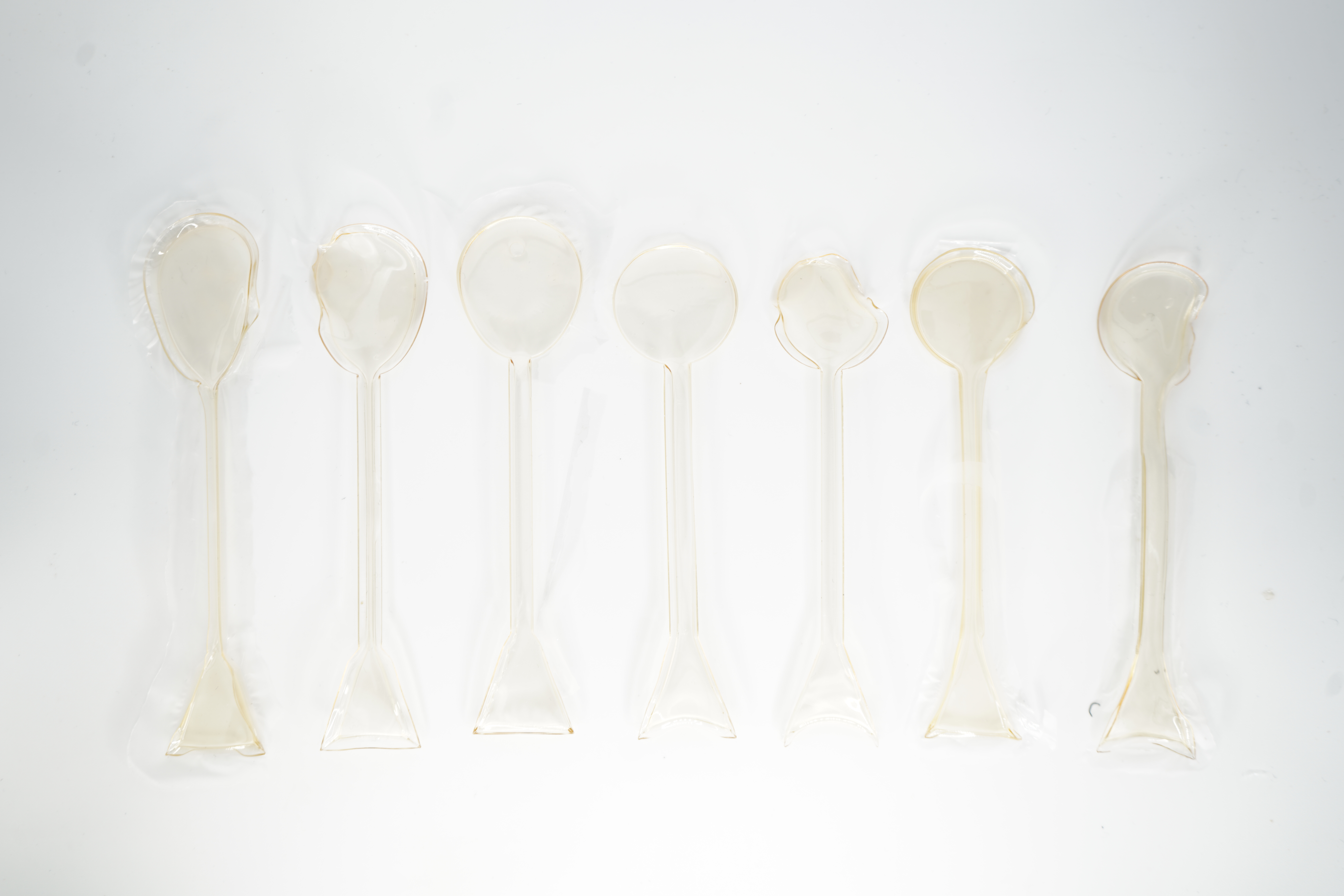
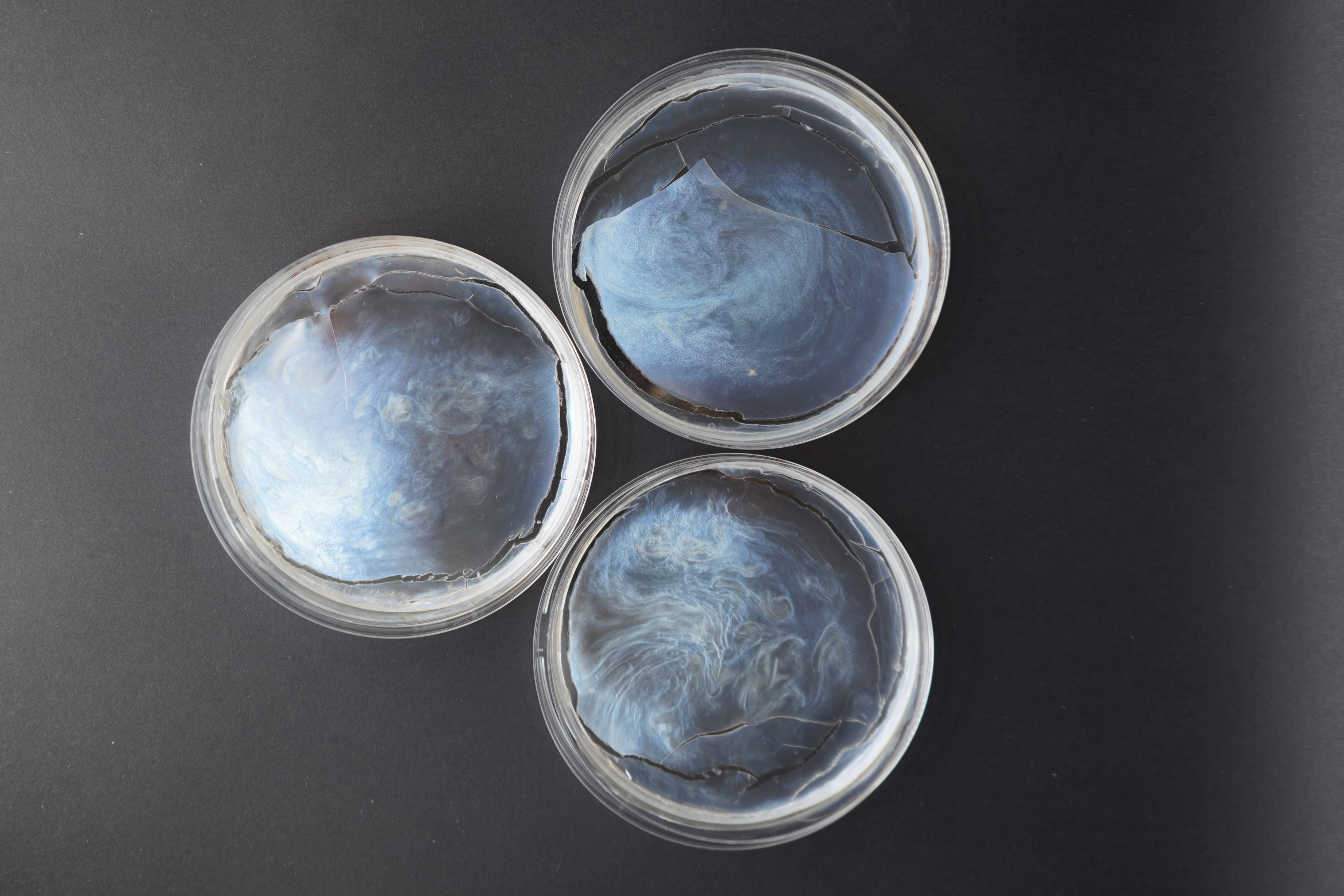
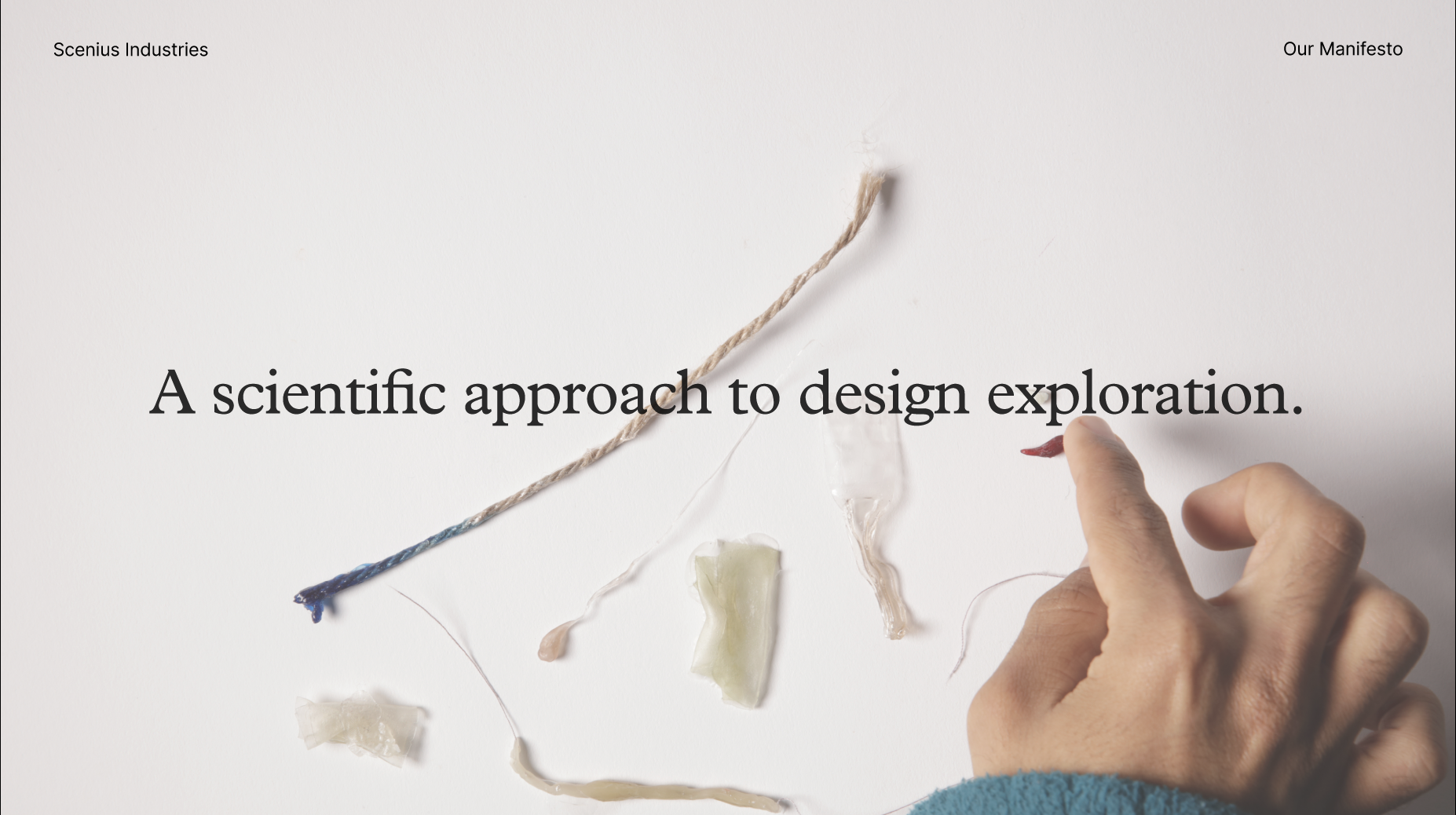
After understanding the current gap, we then started doing our own exploration to better understand what it takes to solve this problem. We do many bioplastic exploration to understand different ways of making and what it needs to make it more as systematic process rather than just a kitchen exploration.
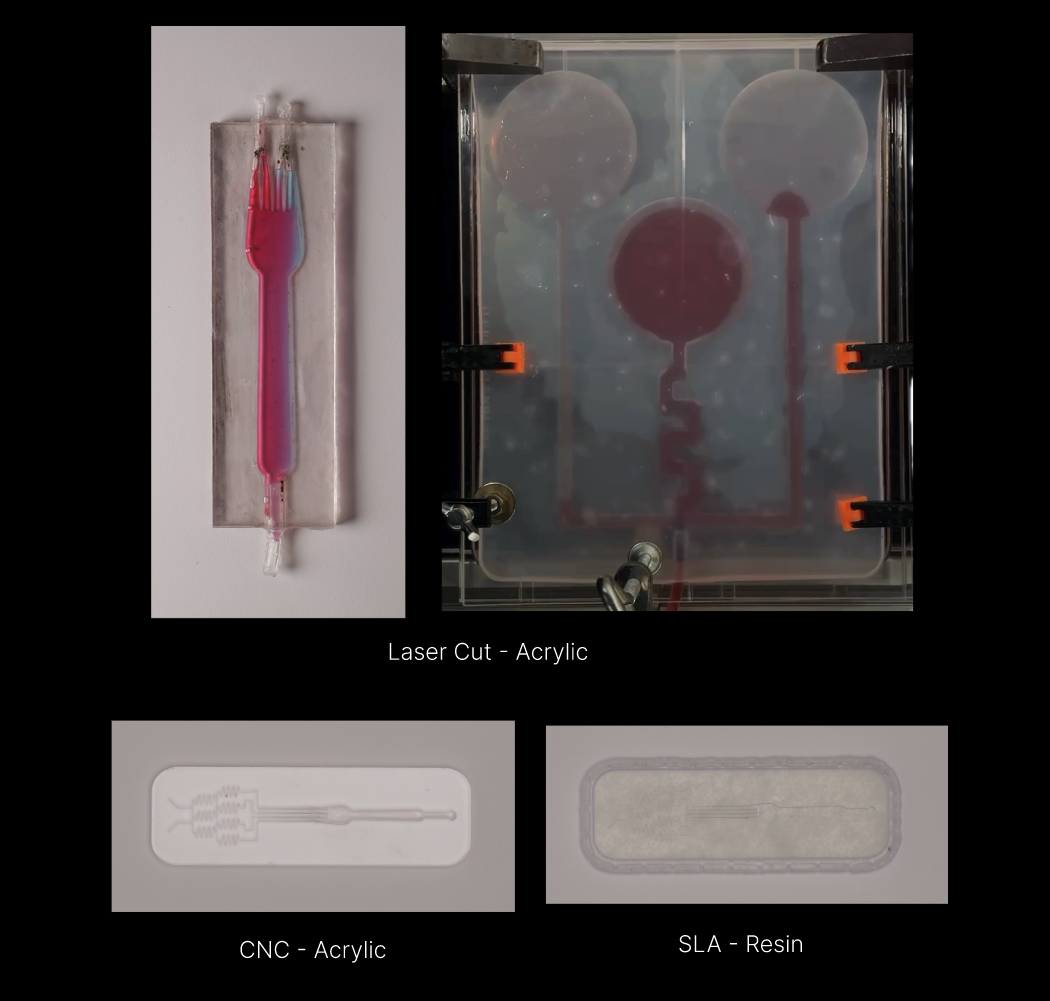
Laminar flow is one of the techniques that struck us after understanding that many bioplastic materials begin as a liquid mixture. By applying this technique, liquid materials can be distributed in parallel layers with minimal to no mixing between them. This enables different properties to emerge as the material dries, as we are working towards achieving FGM (Functionally Graded Material) as one of the outputs.
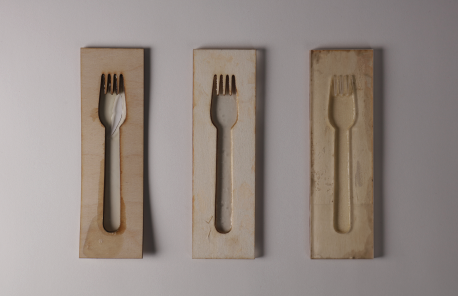
We tested different mould materials to find which works best for each type of result, using liquid gelatin as the test cast. Wood absorbed some of the mixture due to its permeable properties, which reduced shrinkage and helped the material hold its form, but also caused the bioplastic to stick and made it hard to release.
However, as seen in the image on the left, the gelatin bioplastic stretched where it stuck to the rim, creating a hole in the middle. The mould itself also warped from the tension of the shrinking bioplastic during drying.
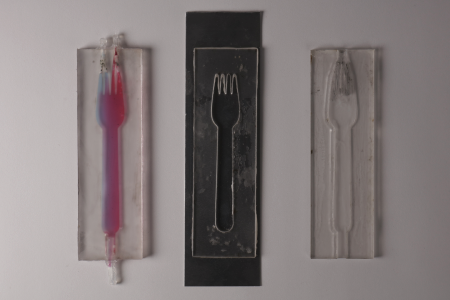
Acrylic has good potential as a mould material; however, depending on the drying time, the bioplastics made from gelatin and other mixtures we tested showed varying levels of shrinkage during drying.
Conclusion:
Producing bioplastic materials in batches can be challenging, as differences in temperature, conditions, and materials all affect how they dry and determine their final form. Having a system to control and predict these variables could therefore be a game changer in the solution we are developing.
Given the high level of unpredictability involved, a system that can monitor our process and identify the optimal drying setup would help material designers scale up and expand their work.
This system would also serve as a way to collectively learn and study different parameters alongside other designers and makers, enabling a more democratised process in bioplastic production.